

Six Years On, Roger Spitz’s Seminal Paper on the Future of Strategic Decision-Making Reads Like a Diagnosis of 2026
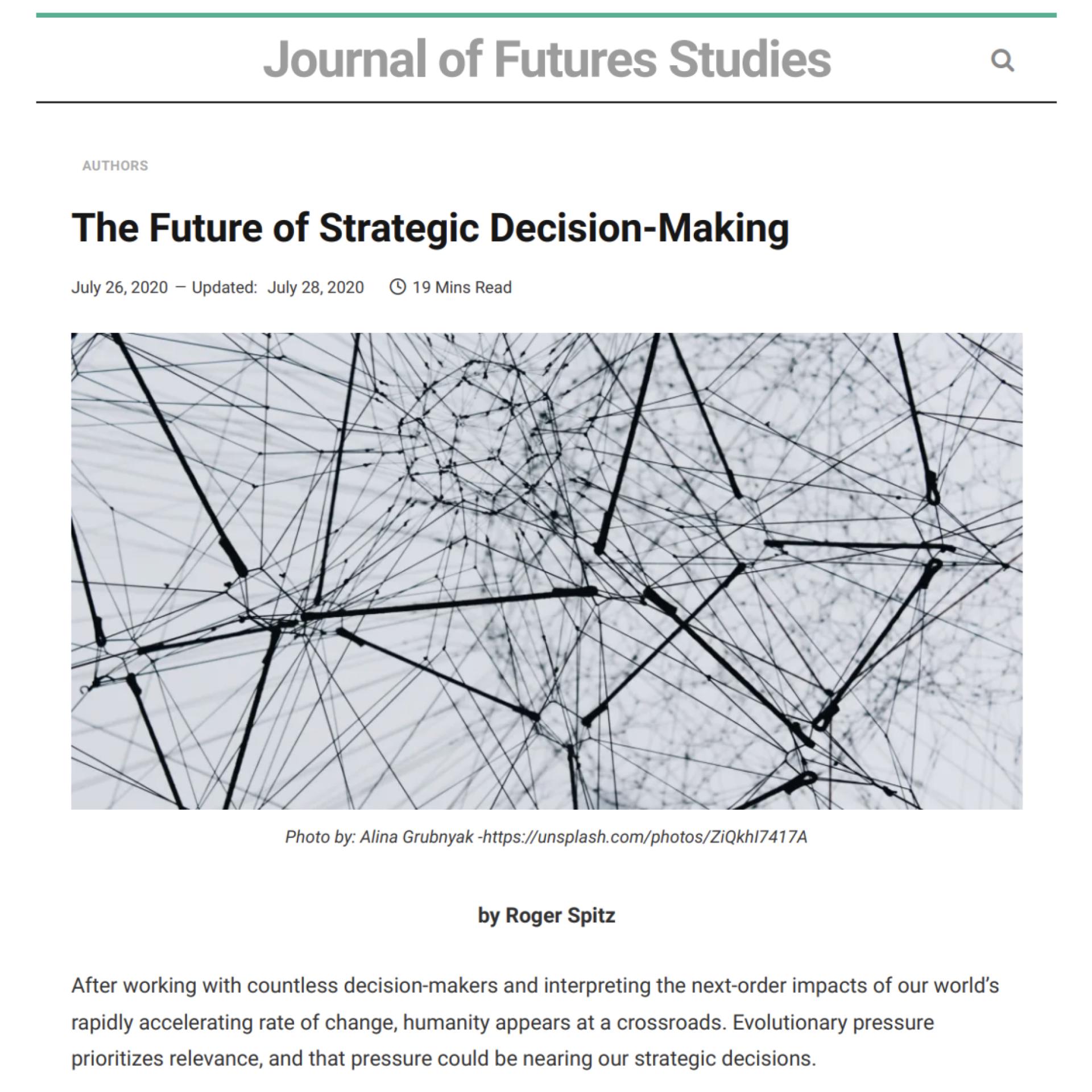
Spitz, Roger. "The Future of Strategic Decision-Making". Journal of Futures Studies, July 26, 2020.
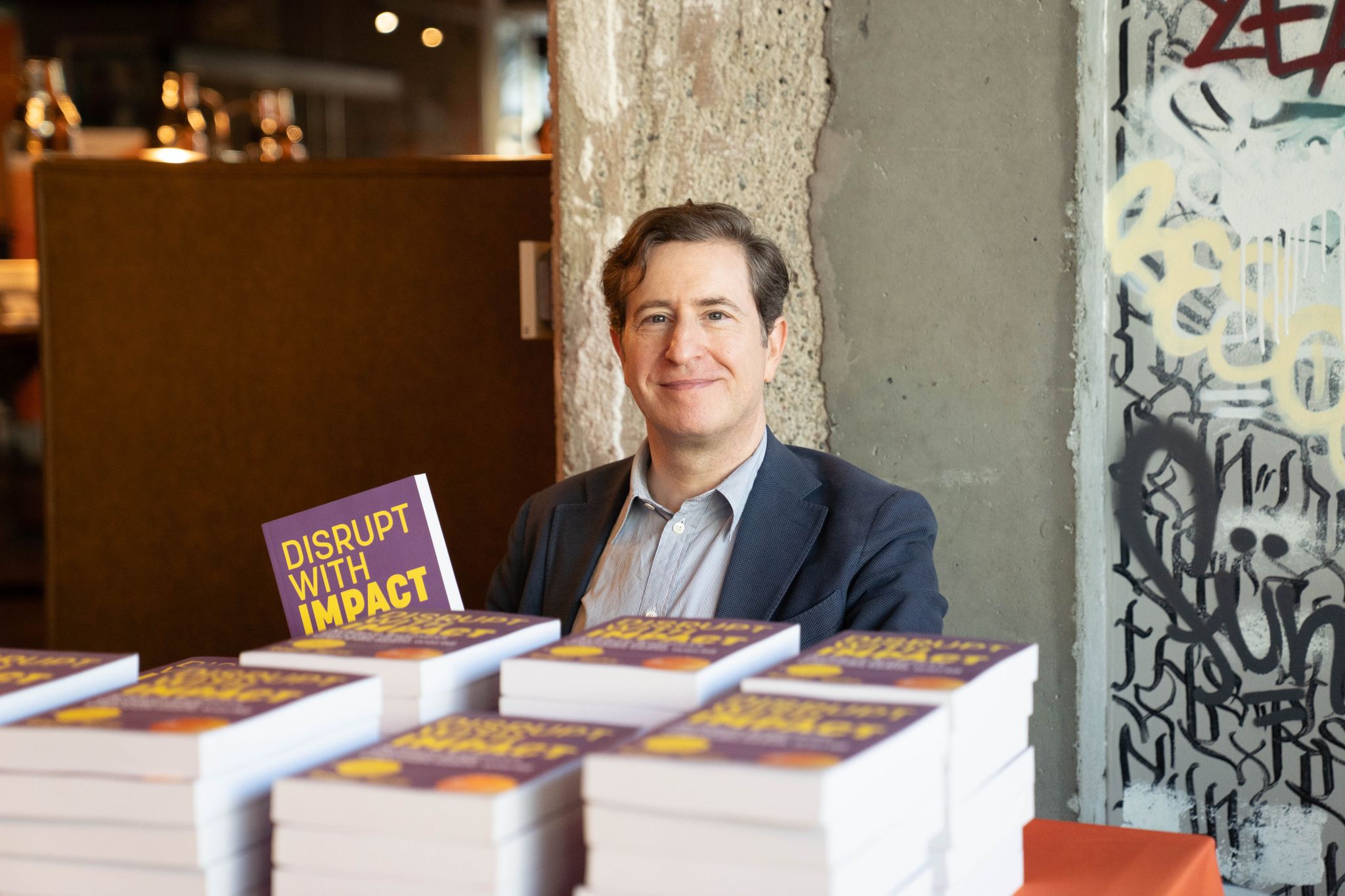
Roger Spitz Keynote Book Signing
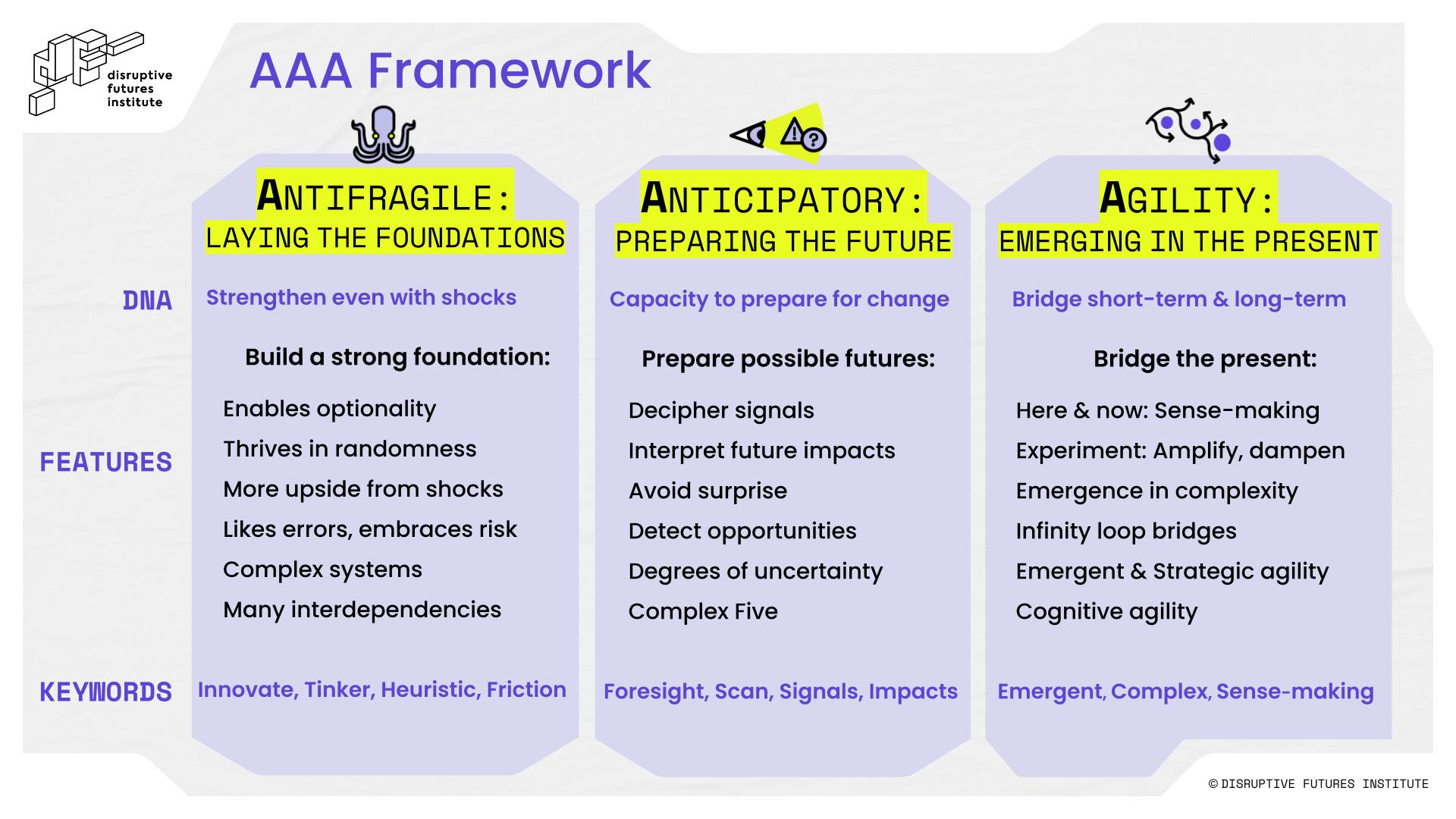
AAA Framework - Roger Spitz (Disruptive Futures Institute)
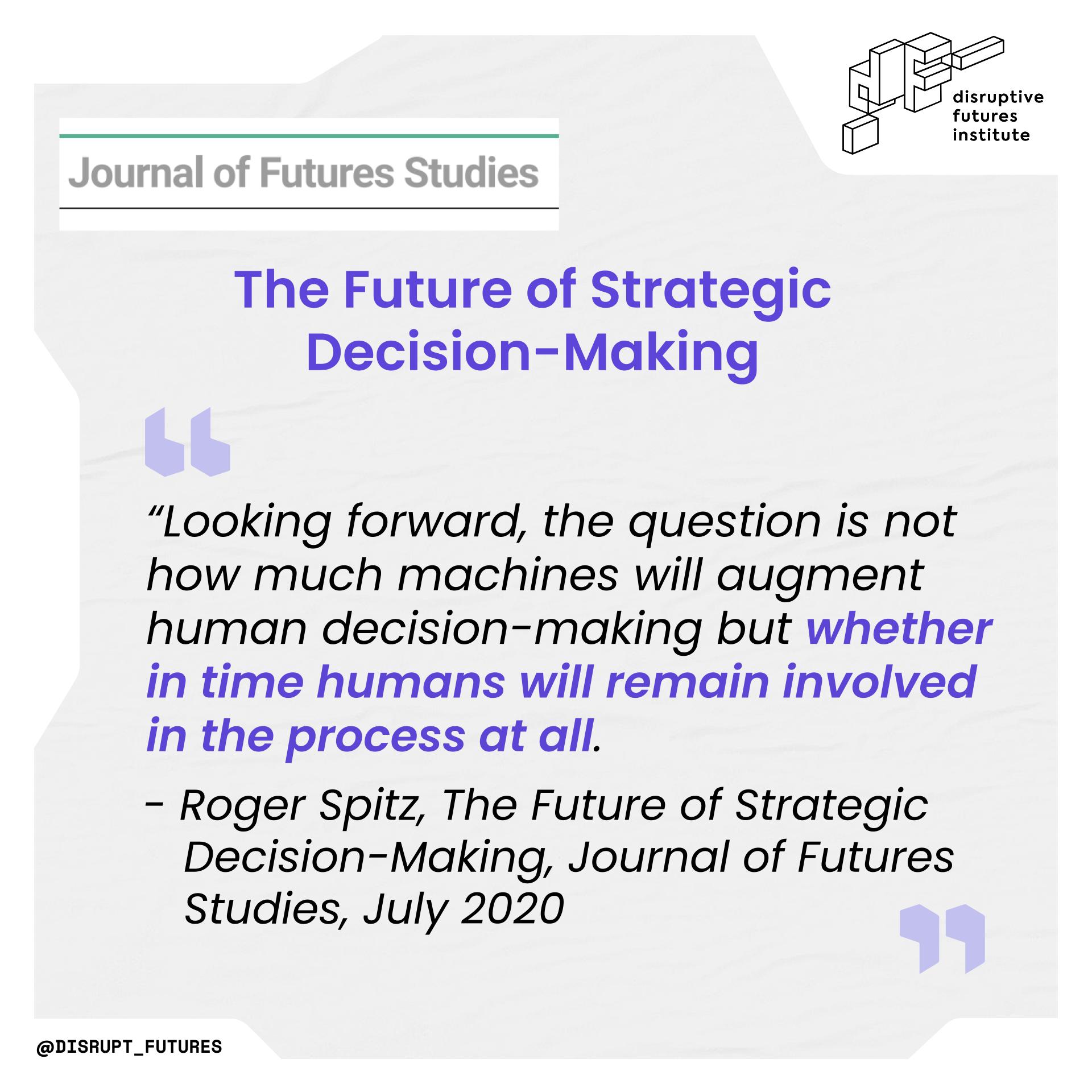
Roger Spitz, The Future of Strategic Decision-Making, Journal of Futures Studies, July 2020
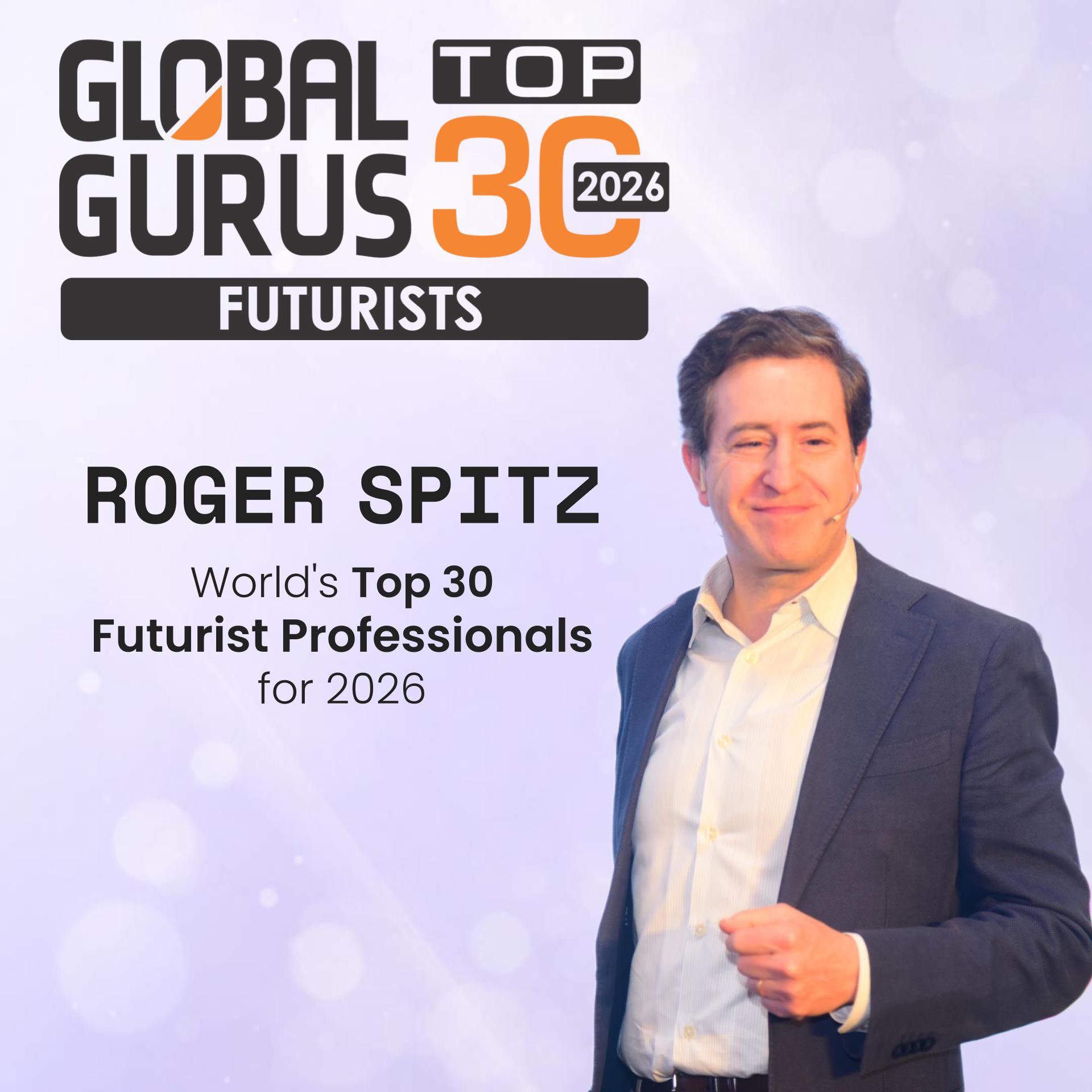
Roger Spitz - World's Top 30 Professional Futurists (Global Gurus)
The 2020 Journal of Futures Studies Article That First Formalized the AAA Framework Is Now Cited Across AI, Military Strategy, and Governance
SAN FRANCISCO, CA, UNITED STATES, July 19, 2026 /EINPresswire.com/ -- Six years ago this month, the Journal of Futures Studies published “The Future of Strategic Decision-Making” by Roger Spitz (July 26, 2020). Written well before generative AI reset assumptions about cognition and work, the paper posed the question now central to the AI debate: not how much machines will augment human decision-making, but whether humans will remain involved in the process at all.
The paper delivered both diagnosis and prescription. The diagnosis: the environment Spitz named Metaruptions in 2019 - complex, nonlinear, unpredictable, cascading, and self-reinforcing. The prescription: the first formal publication of Spitz’s AAA Framework (Antifragile, Anticipatory, Agility), the capabilities required for effective decision-making in that environment. Metaruptions now designated a Word of the Year for 2026 by Forbes contributor Dr. Zhexembayeva.
A PAPER THAT PRECEDED ITS ERA
Several lines from Spitz’s 2020 The Future of Strategic Decision-Making paper read as strikingly prescient:
• “Looking forward, the question is not how much machines will augment human decision-making but whether in time humans will remain involved in the process at all.”
• “If we don’t improve our abilities to evolve in a nonlinear world, we could find human decision-making sidelined by algorithms as we become blindsided by increasing complexity, while machines gradually learn to move up the decision value chain.”
• “Ultimately it is an existentialist question around agency, as evolutionary pressure dictates that the best decision-makers will be the ones who survive.”
• “Evolutionary pressure prioritizes relevance, and that pressure could be nearing our strategic decisions.”
In July 2020, Spitz mapped how machines were moving up the decision-making value chain - from optimization to augmentation toward prescription - and warned that if humans failed to upgrade their own capabilities, the C-Suite could give way to an “A-Suite” of algorithms. The paper framed decision-making as a three-step process (detect and collect intelligence, interpret the information, make and implement decisions) and showed how AI was advancing through each step.
This was before large language models entered the mainstream, before agentic AI reached the enterprise, and before “human in the loop” became policy language. The debates now unfolding on prescriptive systems, automation of judgment, and the erosion of human agency were the ones the paper laid out six years ago.
The thread continues. In 2026, Elon University’s Imagining the Digital Future Center published Spitz’s “Will superstupidity be as dangerous as superintelligence?” – extending the same argument.
FROM BOARDROOMS TO THE LITERATURE
The paper’s prescience was earned, and its timing reflected a longer trajectory. Spitz had spent two decades advising CEOs, boards, and shareholders on their most strategic decisions – over 50 transactions worth $25 billion as Global Head of Technology M&A. After moving to San Francisco in 2017, committed significant time to learning outside his field: complexity science with the Santa Fe Institute, design thinking at Stanford’s d.school, and futures thinking at Singularity University and Institute for the Future. His AAA taxonomy was already in use in his advisory work before publication; Metaruptions was coined in 2019. The July 2020 article gave that thinking its first formal articulation in the academic literature.
The paper’s subsequent existential reading of decision-making deepened into “An Existential Framework for the Future of Decision-Making in Leadership,” co-authored by Roger Spitz with Rauli Nykänen (Cambridge Scholars Publishing, 2021). The AAA Framework was further codified across Spitz’s four-volume The Definitive Guide to Thriving on Disruption (2022-2023) and Disrupt With Impact (Kogan Page, 2024), and published as “The AAA Framework: Responsible Leadership for Sustainable Futures” in Anticipatory Governance: Shaping a Responsible Future (World Scientific Publishing, Singapore, 2025). The environment it described became the terrain of Metaruptions, now referenced by the International Training Centre of the UN’s International Labour Organization (ITCILO), the UK National Preparedness Commission, the CFA Institute, and professional bodies worldwide from actuaries to chemical engineers.
CITED WHERE DECISIONS ARE HARDEST
Six years later, Spitz’s paper and AAA Framework are cited and used far beyond futures studies - frequently by authors with no connection to the field. In Military Strategy Magazine (Winter 2026), U.S. Army War College authors cite Spitz (2020) in their analysis of AI and wargaming, arguing for planning systems that are antifragile - "systems that improve under chaos" - rather than fragile algorithmic command. Spanish-language cyber risk research in Latin America deploys Spitz’s Complex Five risk metaphors - which grew out of the paper’s Black Swan and Gray Rhino taxonomy - to model AI-automated cyber operations. Management research cites the paper on AI and strategic planning under deep uncertainty, and academic work on AI leadership references its “C-Suite to A-Suite” warning directly.
A representative sample appears in the appendix below; each citation arose independently - from Washington to Bogotá to Ankara.
SIX YEARS ON: FROM PAPER TO PLATFORM
Metaruptions remain the operating environment for the rest of the decade. The questions the paper raised now headline global stages. Spitz’s Visionary Trilogy - the Mindset, Intelligence, and Leadership Shifts - carries the analysis into 2026-2027 keynote platforms, with the Intelligence Shift extending the paper’s core question directly: as algorithms calculate the probable, where does human judgment retain its edge? Engagements in the first half of 2026 included Meta’s Conversations 2026 in London, RSA Conference in San Francisco, and MIT Technology Review in São Paulo, with demand extending well into 2027.
Independent recognition tracks the same arc: #15 in Global Gurus’ World’s Top 30 Futurist Professionals for 2026, #6 globally in National Security (Thinkers360), ranked the #1 futurist keynote speaker for disruption, foresight, and AI by leading agencies, media, and international platforms. Spitz is a member of the World Economic Forum’s AI Governance Alliance and Global Foresight Network, and contributes to global risk reports.
“The purpose was never prediction,” says Spitz, Chair of the Disruptive Futures Institute. “The paper described a pervasive environment and the capabilities it demands. Six years of citations, case studies, and boardroom adoption have field-tested that argument. And candidly, the jury is still out on whether organizations, and society, are building those capabilities fast enough for what the rest of the decade holds. Metaruptions gave us the diagnosis of that environment. The AAA Framework is the prescription for how we prepare and respond.”
As the 2020 paper concluded: “Adopting AAA can ensure more agency over our futures. The longer we wait, the greater the risk of being moved further along the value chain than our preferred future would have envisioned.”
Read Roger Spitz’s original paper on The Future of Strategic Decision-Making in the Journal of Futures Studies:
• https://jfsdigital.org/2020/07/26/the-future-of-strategic-decision-making/
For media inquiries and interviews: media@disruptivefutures.org
For speaking inquiries, or to view Roger Spitz’s speaker reel and book a keynote:
• https://www.disruptivefutures.org/speaking
###
APPENDIX: MEDIA BRIEFING NOTES FOR EDITORS
This briefing pack provides contextual materials and provenance for editors and partners covering the sixth anniversary of “The Future of Strategic Decision-Making,” its lineage, and the AAA Framework and Metaruptions concept. Citations reflect independent references by the authors named; they do not imply institutional endorsement.
1. THE PAPER: PROVENANCE AND CORE ARGUMENTS
Spitz, R. "The Future of Strategic Decision-Making". Journal of Futures Studies, July 26, 2020.
https://jfsdigital.org/2020/07/26/the-future-of-strategic-decision-making/
Spitz's seminal paper advanced four arguments now central to the field’s engagement with AI and decision-making:
• Decision-making is no longer a human exclusive. Framed as a three-step process - detect, interpret, decide - with AI advancing through each step toward prescriptive recommendations.
• Machines are moving up the decision value chain. From optimization to augmentation to autonomous prescription - documented through cases spanning drug discovery, legal due diligence, and algorithm-driven venture investing.
• The AAA Framework. The first formal publication of Spitz’s Antifragile, Anticipatory, Agility as the capabilities humans must develop to remain relevant - from knowing your Black Swans from your Gray Rhinos to building systems that strengthen from disorder.
• From C-Suite to A-Suite. The warning that if humans fail to become sufficiently AAA, strategic decision-making could pass to algorithms - “evolutionary pressure dictates that the best decision-makers will be the ones who survive.”
2. THE TRAJECTORY: 2017-2026
• 2017-2019: After two decades in investment banking - over 50 transactions worth $25 billion as Global Head of Technology M&A - Spitz moves to San Francisco and commits at least 20% of his time to learning outside his field: complexity science (Santa Fe Institute), design thinking (Stanford d.school), the Institute for the Future, and the Long Now Foundation. The AAA taxonomy enters his advisory work; Metaruptions is coined in 2019.
• July 2020: “The Future of Strategic Decision-Making” published in the Journal of Futures Studies - the first formal publication of the AAA Framework and the conceptual foundations of Metaruptions.
• 2021: “An Existential Framework for the Future of Decision-Making in Leadership” (Spitz & Nykänen), in Leadership for the Future, Cambridge Scholars Publishing - deepening the paper’s epistemic analysis of prescriptive AI through Deleuzo-Sartrean philosophy.
• 2022-2023: The Definitive Guide to Thriving on Disruption (four volumes, Disruptive Futures Institute) codifies the AAA Framework, UN-VICE (Unknown, Volatile, Intersecting, Complex, Exponential), the Complex Five, and the language of systemic disruption.
• 2024: Disrupt With Impact (Kogan Page) operationalizes the framework for practitioners; the book sweeps four major awards and hits #1 Amazon bestseller lists in six countries across six categories.
• 2025: “The AAA Framework: Responsible Leadership for Sustainable Futures” published in Anticipatory Governance: Shaping a Responsible Future (World Scientific Publishing, Singapore). Spitz’s AAA Framework applied to insurance in the Journal of Operational Risk (Spitz & Desbiey, Risk.Net).
• 2025-2026: Metaruptions designated a Word of the Year for 2026 by Forbes contributor Dr. Nadya Zhexembayeva (since translated by Forbes Japan); the term frames the ITCILO’s 2026 Futures Toolkit and enters the literature of geopolitics, cyber risk, and grand strategy.
3. SELECTED CITATIONS OF SPITZ (2020): STRATEGY, AI & MANAGEMENT
A representative sample of the cross-disciplinary citations building on the 2020 paper, not a complete record:
• Military Strategy Magazine (Winter 2026): Wilcox, A. B. & Metcalf, C., “AI Command and Staff - Operational Evidence and Insights from Wargaming,” Vol. 10, Issue 4 - U.S. Army War College authors citing Spitz (2020) on antifragile planning systems, “systems that improve under chaos,” versus fragile algorithmic command.
• Management Decision: Biloslavo, R., Edgar, D., Aydin, E. & Bulut, C., on AI and strategic planning in VUCA environments, citing Spitz (2020).
• MANAS Journal of Social Studies (Turkey, April 2026): Yiğitol, B., comparative study on human managers and AI in strategic decision-making, citing Spitz (2020).
• Ünal, A. & Kılınç, İ., “The Feasibility of Artificial Intelligence Performing as CEO: The Vizier-Shah Theory” - engaging the paper’s argument that without AAA capabilities, “C-suite would turn to A-suite.”
• Cyber risk management (Spanish-language, Latin America): Cano M., J. J., Universidad de los Andes - deploying Spitz’s Complex Five risk metaphors in AI-automated cyber operations research.
Beyond direct citations of Spitz (2020), the body of work the paper seeded now travels across policy and security literatures:
• IDOS (German Institute of Development and Sustainability): Policy Brief No. 24/2024 applying “metaruption” to geopolitical analysis.
• National Preparedness Commission (UK): carries the Metaruptions definition in work on the shift from prediction to strategic foresight.
• Global Policy: Garcia, E. V., “Technology for Whom and for What? A Global South View of Tech Diplomacy” (2025).
• Millennium Project / Futures of Technologies Conference 2025: “Exploring Socio-Technical Futures of Work,” citing Spitz (2024) on convergence and the tempo of disruption.
4. THE AAA FRAMEWORK
Introduced formally in the 2020 paper, the AAA Framework (Antifragile, Anticipatory, Agility) equips organizations to be future-prepared amid compounding systemic shocks: Antifragile - building systems that gain strength from volatility and disorder; Anticipatory - deciphering signals, interpreting next-order impacts, and preparing for multiple futures; Agility - bridging long-term vision with real-time decisions. In Disrupt With Impact and The Definitive Guide to Thriving on Disruption, the framework expands into Being AAA+, recognizing the importance of Agency and Alignment. It has been adopted internationally, including case studies and citations in artificial intelligence, cybersecurity, geopolitical, and military strategy literature.
5. THE EXISTENTIAL FRAMEWORK: DECISION-MAKING AS AGENCY
Following his Journal of Futures Studies paper, Spitz co-authored “An Existential Framework for the Future of Decision-Making in Leadership” with Rauli Nykänen (Leadership for the Future, Cambridge Scholars Publishing, 2021). The chapter considers the epistemic context of AI decision-making in uncertain and complex environments: while AI provides increasing insights, complex environments involve unknown unknowns - situations with no right answers. Where decision-making rests on values and the continuous negotiation of what values are held, automated structures are impervious to that discourse. Agency emerges through choice, not structure.
6. METARUPTIONS: FOUNDATIONS IN THE 2020 PAPER
Coined by Roger Spitz in 2019, Metaruptions describe an era rather than a sector or a year: a multidimensional family of systemic disruptions generating widespread, self-perpetuating effects far beyond their initial domains - including a shift in the very notion of disruption itself. The conceptual foundations were first published in “The Future of Strategic Decision-Making” (Journal of Futures Studies, July 2020), then formally codified across The Definitive Guide to Thriving on Disruption (2022-2023) and Disrupt With Impact (Kogan Page, 2024). The lineage: Disruption 1.0 - Creative Destruction (Schumpeter, 1942); Disruption 2.0 - Disruptive Innovation (Christensen, 1997); Disruption 3.0 - Metaruptions (Spitz, 2019).
7. THE VISIONARY TRILOGY & 2026-2027 SPEAKING
Spitz’s flagship keynote platforms carry the paper’s analysis to global stages:
01. The Mindset Shift - Become Visionary in an Unpredictable World; 02. The Intelligence Shift - Upgrade Human Decision-Making in the Age of AI; 03. The Leadership Shift - Foresight to Inspire Transformational Futures.
The Intelligence Shift extends the 2020 paper’s core question directly: while algorithms can calculate the probable, only humans can invent the impossible. Curated guides to the best futurist keynote speakers feature Spitz among their top selections - Socialnomics’ 2026 guide, Speakers Associates’ 2026 buyer’s guide to AI keynote speakers, and Chartwell Speakers’ leading AI & Emerging Tech speakers. Booking inquiries: speaking@disruptivefutures.org
8. ABOUT ROGER SPITZ
Roger Spitz is a top-ranked futurist and global authority on strategic foresight, artificial intelligence, and systemic disruption. As President of Techistential and Chair of the Disruptive Futures Institute in San Francisco, he advises CEOs, boards, institutional investors, and government leaders on anticipating and navigating disruption. A former Global Head of Technology M&A who advised on over $25 billion in transactions, and a venture capital investor backing AI and deep-tech startups, Spitz is ranked #15 in Global Gurus’ World’s Top 30 Futurist Professionals for 2026, #6 globally in National Security (Thinkers360), and the #1 futurist keynote speaker for disruption, foresight, and artificial intelligence by leading agencies, media, and international platforms.
9. ABOUT THE DISRUPTIVE FUTURES INSTITUTE
Based in San Francisco, the Disruptive Futures Institute pioneers futures intelligence. Its proprietary frameworks - including Metaruptions, the AAA Framework (Antifragile, Anticipatory, Agility), and Techistentialism - are adopted by boards, executive teams, and institutions globally. Its YouTube channel, home to the Metaruptions interview series and Spitz’s keynote and media library, has grown to over 50,000 subscribers.
FOLLOW THE DISRUPTIVE FUTURES INSTITUTE
► Substack - Metaruptions Briefings: https://thrivingondisruption.substack.com
► YouTube (50,000+ subscribers): https://www.youtube.com/@DisruptiveFuturesInstitute
► LinkedIn: https://www.linkedin.com/company/disruptivefuturesinstitute
Media Contact
Disruptive Futures Institute
email us here
Visit us on social media:
LinkedIn
Instagram
YouTube
X
Other
ROGER SPITZ OFFICIAL SPEAKER REEL 2026
Legal Disclaimer:
EIN Presswire provides this news content "as is" without warranty of any kind. We do not accept any responsibility or liability for the accuracy, content, images, videos, licenses, completeness, legality, or reliability of the information contained in this article. If you have any complaints or copyright issues related to this article, kindly contact the author above.
